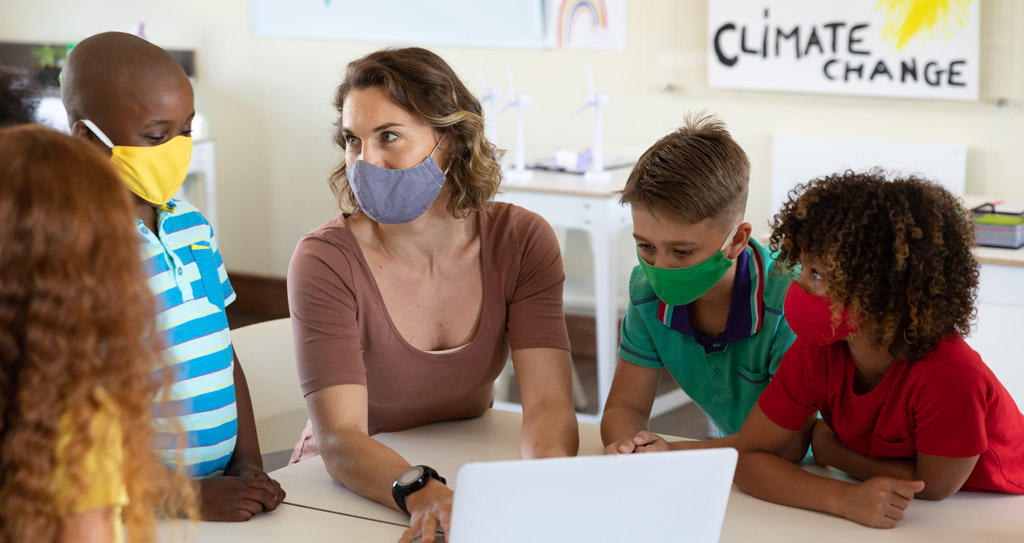
As cases of the COVID-19 Delta variant, a highly contagious strain of the SARS-CoV-2 virus, continually rose, school administrators faced the challenge of keeping schools safely open while providing instruction to address learning gaps and increase achievement levels.
Beyond the educational field, people may view COVID safety as a simple process. Some may question, “Why can’t we just return to the normalcy in the past?” However, school leaders must consider many variables that affect the entire school community.
The past several years of unprecedented challenges are one that I can only describe as a “year[s] of learning for all.” We’d never before experienced such an unusual situation in our lifetime–and as we endeavored through this process, we were all still learning. Along the way, I hope that we collected essential information that would enable us to make informed decisions designed to support the educational process and the school community as a whole.
Ensuring School Safety: CDC’s Recommendations
According to Robin Lake, Director of the Center for Reinventing Public Education, schools faced difficulties staying open in the fall of 2021. As the number of COVID-19 Delta variant cases climbed, administrators should have remained vigilant while curbing the virus’s spread in schools.
Many K-12 schools took precautions by implementing CDC recommendations for COVID-19 prevention, such as:
- Social distancing
- Usage of personal protective equipment (PPE)
- Extensive cleanings
- Conducting daily screenings
- Handwashing
- Staggering schedules and hallway traffic
- Addressing ventilation concerns
“Back to the Future” of Virtual Education
If administrators deemed the school environment unsafe, they considered implementing contingency plans, such as returning to entirely virtual or hybrid instruction. Although this was an unpopular decision with most parents and students, some believe it was the best way to educate students while containing the virus. While making these decisions, school officials should have considered the following four points:
- Flexibility Is Key!
- Be flexible in your mindset.
- If the need to cancel in-person classes arises, prepare yourself to pivot to virtual or hybrid instruction.
- Develop an instructional plan for absent students and staff.
- Always Be Wary & Informed
- Be vigilant of all cases within the school and outside community.
- Identify and support students or staff displaying mental health concerns.
- Stay well-aware of the most recent CDC updates.
- Speak Up–And Often!
- Communicate frequently with staff, parents, and upper administration.
- Resolve questions and concerns as immediately as possible.
- Follow the Rules
- Ensure that staff and students adhere to all protocols.
- Adhere to the Individuals with Disabilities Education Act (IDEA).
- Be consistent while implementing processes and instruction.
While schools worked through the painstaking process of shielding everyone’s safety, they were also responsible for developing an effective and consistent instructional program. Inevitably, many students faced achievement gaps caused by various factors corresponding with the COVID-19 crisis.
What is “Long COVID” and what does it mean for schools? Find out here.
Does your school or district need assistance with compliance monitoring or audit preparation? I can help! Reach out to me through this form or via email at ageissel@txsource.com.