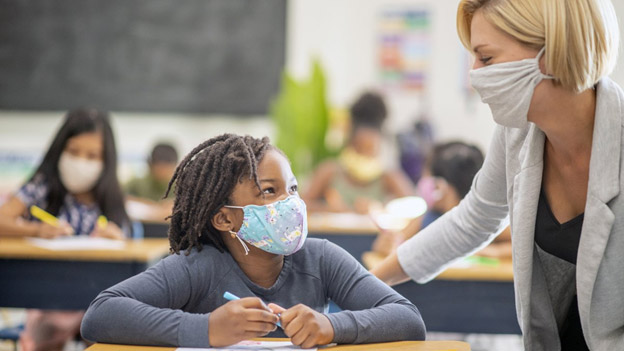
As schools continue emerging after several years of post-COVID operations, is it time for an education reset? Secretary of Education Dr. Miguel Cardona thinks it is. During a January 2022 speech at the Department of Education, he reiterated the necessity of an education reset to close the learning gap.
In his speech, Dr. Cardona asked school officials to examine their current policies and practices in delivering instruction to their students. He advised that the pandemic highlighted the educational system’s inequalities which, according to him, must be addressed so that schools don’t merely revert to the old ways of instructional practice.
Bridging the Achievement Gap in Education Through an Education Reset
Cardona emphasized that an education reset requires the academic community to be vigilant in providing a high-quality education focused on addressing the needs of underserved student populations, such as Black students, low-income students, students with disabilities, and English learners. He indicated that students from these populations were already underserved before and throughout the pandemic.
Cardona suggested that the pandemic highlighted the digital divide among this underserved population, which faced a lack of technology and internet access over the past several years.
Unfortunately, the divide greatly impacted student learning and increased the achievement gap in education.
Schools did their best to provide households with technology, and internet companies helped with providing internet services. However, student attendance was still poor, and the achievement gap grew as their learning level fell behind established academic benchmarks. Cardona, who identified these difficulties as profound, encouraged school leaders and administrators to focus on closing these educational opportunity gaps for all students.
Schools became aware that the delivery of instruction during the pandemic was full of difficulties. As they struggled to provide education primarily through virtual platforms, their eyes were opened to faulty processes, lack of teacher training, and insufficient technological resources. Many school leaders attempted to address these issues by valiantly trying to keep schools open. However, Cardona stated that in-person instruction was inadequate and asked schools to focus instead on “making up for the lost time.”
Cardona did not provide any information about new initiatives through the Department of Education to assist schools with this endeavor. According to K-12 Dive reporter Kara Arundel, Cardona made, without offering any additional support from the federal government, the following recommendations that schools can currently employ:
- Target learning needs and implement strategies to meet student needs.
- Establish tutoring, after-school, and summer sessions to close the learning gap.
- Tutoring effectiveness requires 30 minutes per day, three times per week.
- Encourage high school students to participate in school-sponsored extracurricular activities.
- Provide mental health support throughout the school day.
- Use pandemic relief funds to ensure that every student can read by the third grade.
- Encourage family and parent engagement.
- Create more substantial college and career pathways among pre-K-12 systems, two-year and four-year colleges, and workforce partners.
The Impact of Community Mental Health Support
In response to Cardona’s message, school officials favor an education reset. However, they also believe that any revisions to educational practice must include consistent mental health support for the entire school community. They acknowledge that the past two years have significantly affected student achievement. Still, the stress of the emotional strain placed on students, teachers, and administrators has played a significant role in learning.
School leaders advocate for an urgent increase in mental health services and improved instructional support. However, they are growing concerned because the necessary funding to address these needs will be insufficient as schools work to implement targeted strategies.
Daniel Domenech, the executive director of The School Superintendents Association (AASA), agrees with Cardona’s vision. He stated, “Relying on best practices of the past cannot and should not be an option for educators if we’re going to effectively address the needs of all children–no matter their zip codes or socio-economic status.”
However, he and Mike Magee, the CEO of Chiefs for Change, agree that additional federal funding is needed to support school processes and instruction. School administrators and leaders will remain focused on equity and provide students and schools with resources to close the gaps. They also focus on providing instructional staff training to eliminate implicit bias and implement culturally relevant professional education for teachers.
Addressing the Issue of Staff Retention
While many focus on educational equity, others are growing greatly concerned with the fallout from the emotional distress: staffing shortages. Recent surveys conducted on school staffing showed the emotional impact on school staff, including principals.
The survey results predict that many school staffs will leave their profession over two to three years. School leaders insist they should devote more attention to staff retention and strengthening the pipelines to recruit highly qualified personnel.
Officials argue that schools will face the difficulty of decreasing the achievement gap in servicing their students’ needs without the personnel. Retaining and recruiting educators is not an easy task, and it will require resources that are typically unfunded through school budgets. Therefore, administrators are requesting additional funding from the federal government to achieve their goals.
Additionally, any educational reset must include provisions in case the virus resurges. Most educators believe their school is prepared to deal with a possible future wave of COVID-19 infections. However, they’re less likely to agree that their responses include returning to the most restrictive pandemic precautions, such as remote learning and universal mask requirements.
We can safely say that the pandemic has taught everyone about best practices and school safety. There are also conflicting opinions regarding which precautions to implement if needed. However, it’s necessary to include processes as a part of any education reset.
Creating An Educational System for Students To Thrive
Our educational system has traditionally relied on what is considered best practices. However, schools must now consider many factors when revising an educational system. As this process continues to evolve, opinions will vary on how to accomplish the goal of addressing the needs of students, staff, and the entire school community, which focuses on educational achievement while closing the learning gap.
To achieve this goal, all parties must collaborate and communicate to place students first. Everyone wants the best for their children, and fostering an environment that puts children first will significantly impact education. We all must learn to work together and compromise to develop a system that makes all students successful lifelong learners.