Speech-language pathology is widely considered one of the most satisfying and worthwhile jobs due to its high pay, substantial job security, and plentiful opportunities for career advancement. Furthermore, these professionals have a direct role in enhancing the lives and health of their patients.
A speech-language pathologist, also known as a speech therapist or SLP, works with people with communication disorders, speech impediments, and language comprehension challenges. However, becoming an SLP requires licensure and certification, exam passage, a clinical fellowship, and a specific educational background. If you are thinking about becoming a speech-language pathologist, you should be aware of the necessary steps to begin working in the profession.
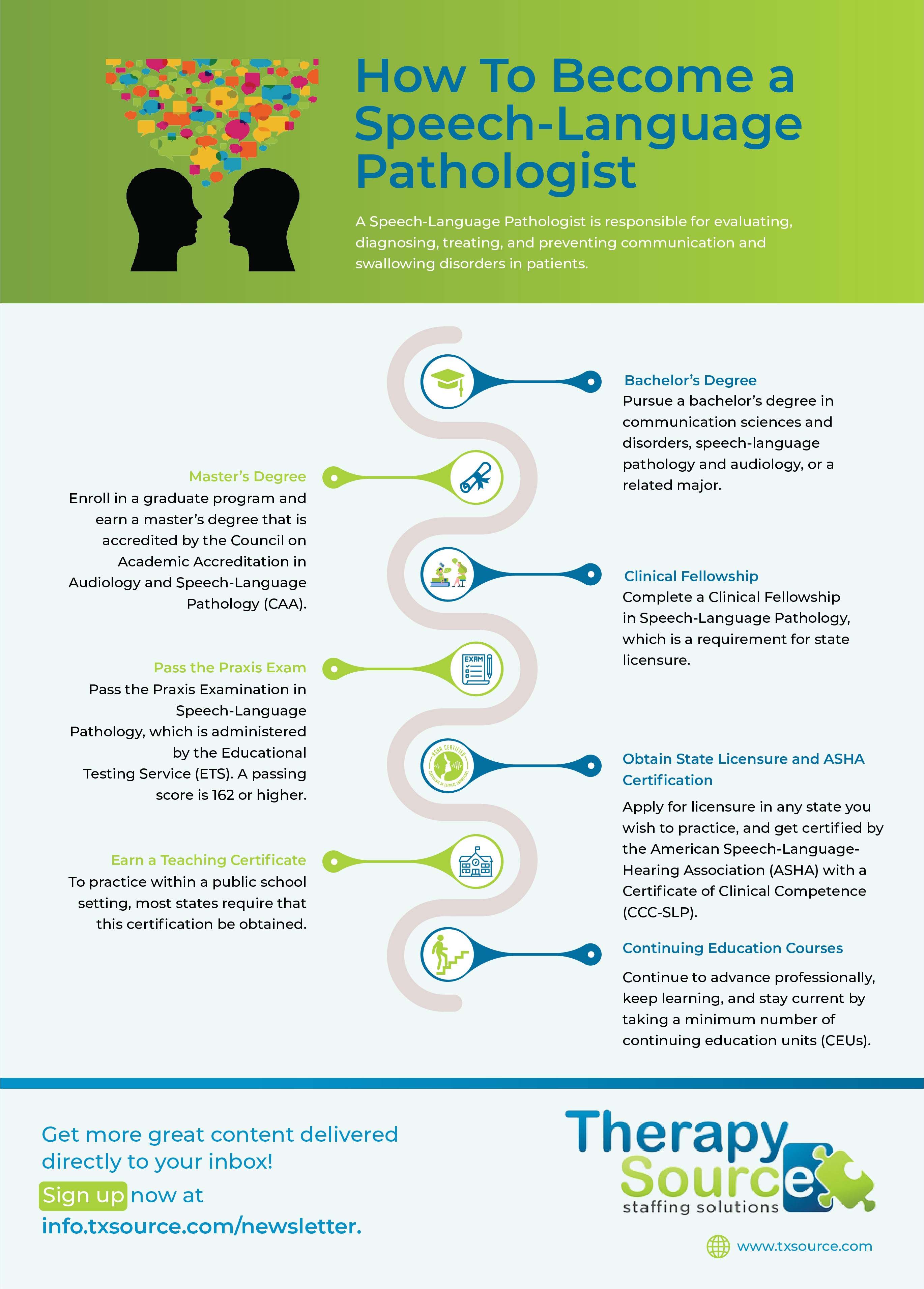
1. Earn a Bachelor’s Degree
Before starting your career as an SLP, you must earn a bachelor’s degree in a related field, such as Speech-Language Pathology and Audiology or Communication Sciences and Disorders. However, additional degrees can prepare you for a career as an SLP, such as degrees in psychology, linguistics, or education.
2. Master’s Degree
Next, you must enroll in a master’s degree program accredited by the Council on Academic Accreditation in Audiology and Speech-Language Pathology (CAA). Examples of program titles are Master of Science in Communication Science and Disorders or Master of Science in Speech-Language Pathology.
3. Clinical Fellowship
You must complete a post-graduate clinical fellowship because it is required for state licensure. The primary purpose of a clinical fellowship is to allow students to receive hands-on experience working with people with speech and communication disorders. The American Speech-Language-Hearing Association (ASHA) requires a specific number of clinical hours to meet the fellowship requirements.
4. Pass the Praxis Exam
You must pass the Praxis exam administered by the Educational Testing Service (ETS) to earn licensure. The exam includes information about the foundations of speech-language pathology, evaluation and screening of patients, etiology, treatment implementation, and more.
5. Obtain State Licensure and ASHA Certification
Next, you should apply for state licensure, specifically the Speech-Language Pathology Certificate of Clinical Competence (CCC-SLP). Requirements for state licensure will vary based on the state, and be aware that you will have to apply for licensure in any state that you want to practice. At the same time, many SLPs also apply through ASHA for accreditation.
6. Earn a Teaching Certificate
Earning a teaching certificate is a further step that may be required to be employed as a certified school-based SLP. However, specific requirements to practice as an SLP will change based on location.
7. Continuing Education Courses
To continue advancing your career and maintaining your licensure in many states, complete a certain number of continuing education hours. This can help you to remain aware of the most recent developments and trends in the field, which will cause you to be more effective while treating patients.